June 5, 2026 • Maren Calloway • 8 min reading time • Prices verified June 6, 2026
Mini Chalkboard Signs for Weddings and Parties: Bulk Buying Without the Ghosting Regret
If you’ve started planning a wedding, birthday party, or styled event, you’ve probably noticed that mini chalkboard signs — small, reusable boards where you write labels, table numbers, or welcome messages in chalk — are everywhere right now. They show up at escort card tables, at buffet spreads naming each dish, tucked into flower arrangements, or standing in little easels marking where guests should sit. They’re appealing for an obvious reason: they look handmade and warm without requiring an actual hand-lettering budget for every single sign. But there’s a catch that a lot of first-time bulk buyers discover too late. These boards arrive looking promising, and then on the day of the event — or in the photos — the writing fades, smears, or produces a pale “ghost” of whatever was written on them before. That failure mode, called ghosting (when a previous message leaves a visible residue that won’t fully erase), can quietly ruin the aesthetic you spent weeks building. This guide is for the planner, event stylist, or couple who has a purchase decision pending right now and wants to buy confidently, in quantity, without that regret.
Why Ghosting Happens — and Why Budget Boards Are Most Vulnerable
Ghosting on a chalkboard surface is not a cleaning problem. It’s a surface porosity problem. When a chalkboard is new — whether it’s a small A-frame sign or a slate tile — the surface has microscopic pores that haven’t been filled by chalk dust yet. The first time you write on it and then erase, chalk pigment settles into those pores and refuses to come out completely. The result is a faint impression of the previous message that photographs like a smudge or a shadow.
The fix for this is called seasoning: before you write anything meaningful on the board, you rub a piece of chalk on its side across the entire surface in overlapping passes, covering every inch, then erase it completely. You’re intentionally flooding the pores with neutral chalk dust so they don’t grab your actual lettering unequally. Good Housekeeping’s guide to chalkboard care describes this process as a non-negotiable first step on any new board, noting that skipping it is the single most common reason chalk lettering looks patchy or leaves residue behind.
The surface material determines how badly an unseasoned board will ghost:
- Slate (real stone) is the most forgiving because it has a consistent, fine-grain pore structure. Properly seasoned, it’s the gold standard for writeability and erasure. Unseasoned, it still ghosts — but the ghost is usually lighter and easier to work with.
- MDF with chalkboard paint (medium-density fiberboard coated in chalk-formulated paint — the most common material in budget bulk packs) is far more prone to deep ghosting because the painted surface is softer and more absorbent. The Rust-Oleum Corporation’s chalkboard paint product data sheet recommends a full 24-hour cure time after application before any chalk contact, and identifies unseasoned or under-cured paint as the primary cause of permanent ghosting on painted surfaces.
- Tempered hardboard or Masonite with factory-applied chalkboard coating sits in the middle — better than cheap painted MDF, not as resilient as slate.
If you’re buying 50 or 100 mini signs from a wholesale supplier and they’re MDF-based (which most price-point options are), you are accepting the ghosting risk in exchange for cost savings. That’s a legitimate trade-off — but only if you build seasoning time into your event prep schedule.
The Bulk Buying Math: What You Actually Spend Per Sign
By the numbers (2026 market pricing, mid-May):
| Surface type | Typical bulk unit cost (50+ qty) | Seasoning required? | Ghosting risk |
|---|---|---|---|
| MDF with factory chalkboard paint | $0.85–$2.50 | Yes — mandatory | High if skipped |
| Hardboard / Masonite factory coat | $2.00–$4.50 | Yes — recommended | Moderate |
| Slate tile (mini, 4×6 in.) | $3.50–$8.00 | Yes — recommended | Low |
| Liquid chalk marker-compatible glass | $4.00–$9.00 | No | Near zero |
The jump from MDF to slate at bulk quantities is real money. On a 100-sign order, you’re looking at a $250–$550 cost difference. Whether that math works depends on what the signs are doing. For table numbers that guests handle and photograph up close, the slate upgrade is worth pricing out seriously. For buffet labels tucked into a flower arrangement where legibility matters more than tactile quality, MDF with proper prep performs acceptably.
American Metalcraft’s chalkboard sign catalog (2025 edition) lists their mini slate and hardboard options as designed for repeated commercial use with liquid chalk markers, and calls out surface re-conditioning — their term for seasoning — as part of the product’s maintenance cycle. That framing is useful for event planners: if a sign supplier’s own documentation mentions re-conditioning, that’s a signal the surface is durable enough to be worth the prep investment.
Liquid Chalk Markers vs. Stick Chalk: Choosing the Right Medium for Bulk Signage
This decision interacts directly with your surface choice and deserves its own treatment.
Stick chalk (the classic cylinder you used in school) works on every chalkboard surface, is easy to wipe off, and is forgiving of imperfect seasoning. Its drawback for events is legibility at distance and in photographs — it reads as matte white at close range but can wash out under venue lighting or in flash photography.
Liquid chalk markers (alcohol-based or water-based pens that lay down an opaque, almost paint-like line) produce the saturated, high-contrast lettering you see in editorial wedding photography. They’re what most event calligraphers use. The critical detail: liquid chalk markers are not fully removable from all surfaces. On MDF-painted boards, liquid chalk markers can permanently stain if left on for more than a few hours, especially if the paint is not fully cured or the surface is unsealed. Tablecraft’s signage specification guide explicitly distinguishes between surfaces rated for liquid chalk markers and surfaces rated only for standard chalk, noting that using a marker on an incompatible surface “may result in permanent staining.”
The decision rule here is straightforward:
- If your signs are one-time use (labels for a single event, then discarded): liquid chalk markers on any surface are fine — permanence doesn’t matter.
- If you’re renting or reselling the signs after the event: use liquid chalk markers only on slate or glass-coated surfaces rated for them, or you will destroy the surface.
- If you’re an event stylist building a rental inventory: invest in the slate or marker-rated hardboard units up front. The per-unit cost is recovered after 2–3 rentals.
Sourcing Without Surprises: What to Check Before You Buy 100 Units
Event planners consistently report (across forum communities dedicated to wedding vendor logistics, and in buyer Q&A sections on wholesale platforms) that the most common bulk-order disappointments come from three sourcing failures:
1. Surface coating inconsistency within a batch. Factory-applied chalkboard paint on MDF can vary in thickness and cure quality between production runs. If you’re buying from a wholesale distributor, ask whether the product ships from a single production batch. Ordering a 10-unit sample before committing to 100 is worth the extra shipping cost if the event is high-stakes.
2. Frame finish that doesn’t photograph neutrally. Mini chalkboard signs come in raw wood, stained wood, painted wood (usually white or black), and metal frames (typically powder-coat — a baked-on enamel finish that’s more durable than spray paint). Powder-coat frames in matte black are the current dominant choice for editorial-style events, per wedding sourcing discussions tracked across industry publications including The Knot’s 2025 Real Weddings Study, which noted matte black hardware as the most consistently requested finish in the $75,000+ wedding budget segment. If your client’s aesthetic is more rustic or boho, raw-edge or whitewashed wood frames read differently in photos — worth ordering physical samples before committing.
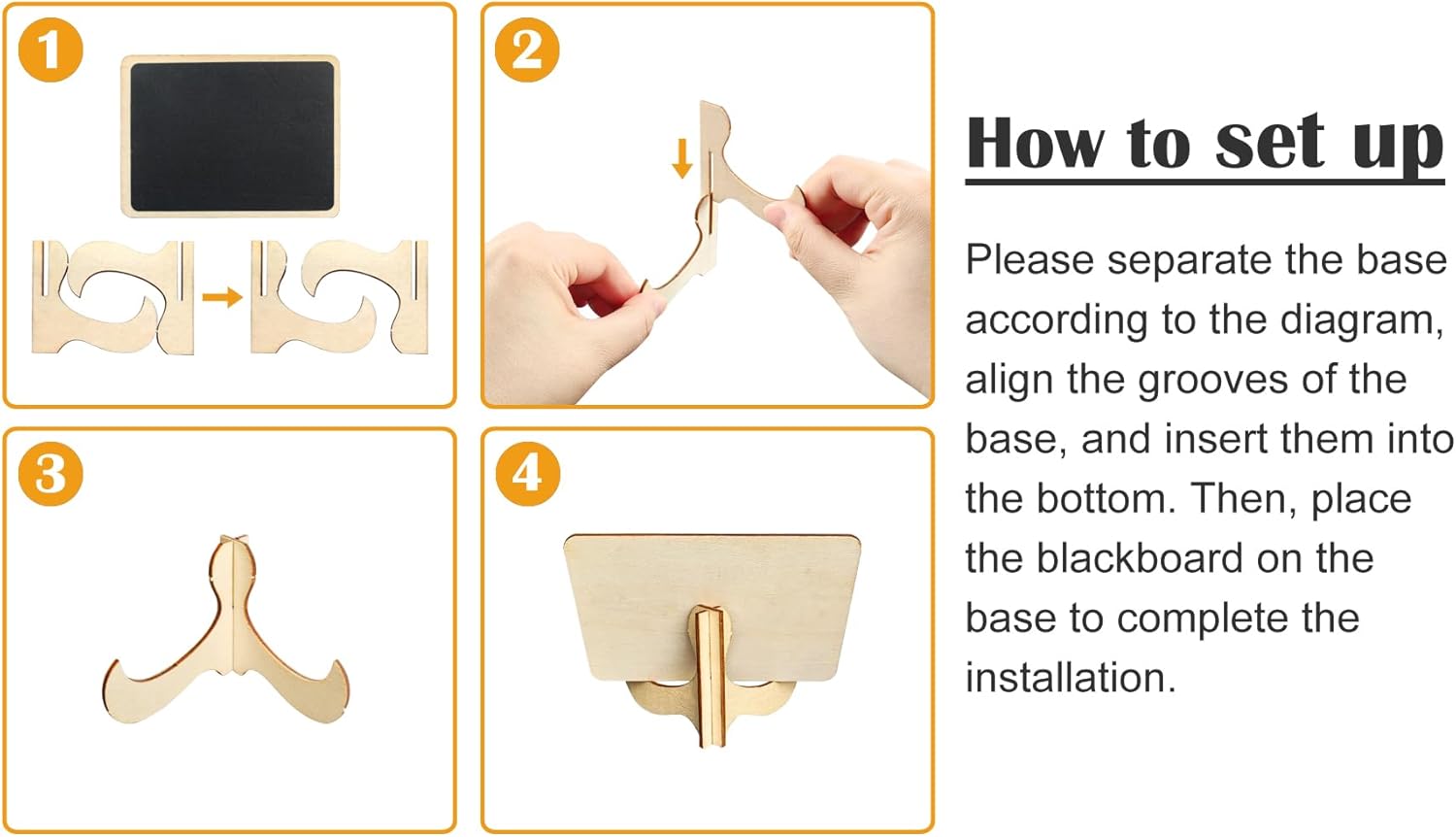
3. Stand or display hardware not included. A surprising number of wholesale mini chalkboard sign listings ship the board only. The small A-frame easel, stake, or clip that holds the sign upright is either a separate SKU or a separate supplier entirely. Build this into your per-sign cost calculation before comparing prices across vendors.
Decision Framework: If X, Then Y
You’ve read the trade-offs. Here’s how to close the decision:
If your order is 75+ signs for a one-day event where signs won’t be reused: Buy MDF-painted boards at the $1–$2.50 per-unit range. Season every board 48 hours before the event (not the night before — give the chalk dust time to settle). Use stick chalk or liquid markers, your choice. Budget 30–45 minutes of prep time per 50 boards.
If your order is for a rental inventory you’ll use 10+ times per year: Spend up for slate or marker-rated hardboard. The ghosting risk compounds with every use on cheaper surfaces — by the fifth event, MDF boards that weren’t properly managed will look visibly degraded. Slate signs sourced from commercial-grade suppliers like American Metalcraft are priced to reflect this durability.
If you’re buying for a high-photography event (editorial wedding, styled shoot, commercial shoot): Surface quality is load-bearing for the final deliverable. Slate with liquid chalk markers is the spec. Budget $5–$8 per sign and treat seasoning as mandatory, not optional. The photography difference between a ghosted MDF sign and a properly prepared slate sign is visible in every wide-angle reception shot.
If budget is fixed and you’re committed to MDF boards: The single highest-leverage action is the seasoning step. Per Good Housekeeping’s chalkboard care guidance, a board that has been properly seasoned, written on, and erased cleanly will photograph at close to the same quality as slate for first-use signage. The difference becomes visible on reuse — which is why for single-event, higher-quantity, lower-budget scenarios, MDF is a defensible call as long as the prep work happens.
Disclosure: ChalkboardTable.com participates in affiliate programs. Some product links in our buying guides generate a commission at no cost to you. Our editorial recommendations are based on published specs, aggregated buyer reviews, and manufacturer documentation — we note our sourcing clearly so you can weigh it appropriately.