April 18, 2026 • Maren Calloway • 9 min reading time • Prices verified June 6, 2026
Chalkboard-Top Kids Activity Tables That Survive the Playroom Without Ghosting
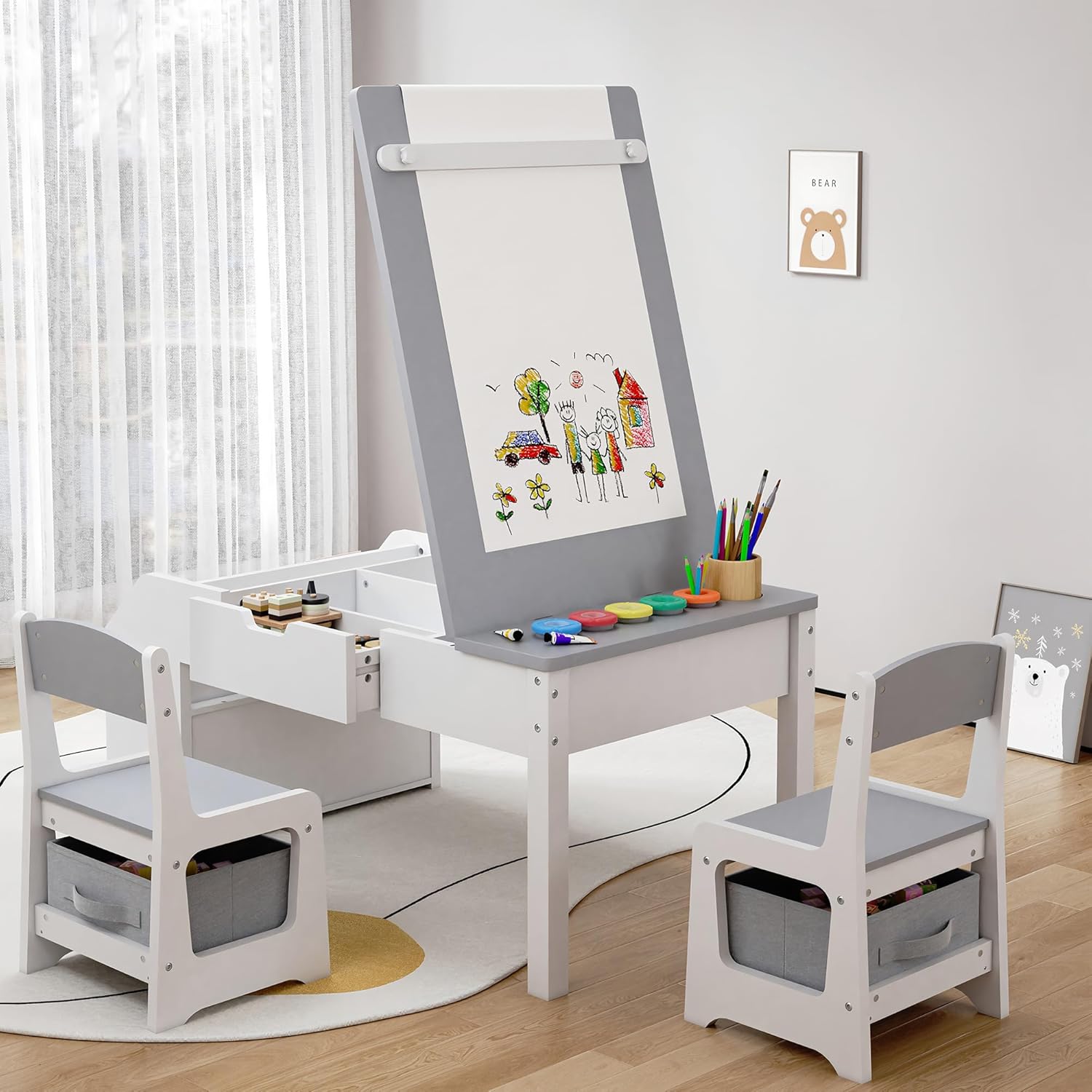
A chalkboard-top activity table is exactly what it sounds like: a table designed for kids, where the entire writing surface is made of chalkboard material — either real slate (a natural stone) or MDF (medium-density fiberboard, a wood composite) coated with chalkboard paint. Kids draw on it with chalk, wipe it clean, and draw again. Simple in theory. But here’s what trips up most buyers: that first month of ownership. If the surface isn’t properly broken in — a process called seasoning, which just means rubbing chalk sideways across the whole surface and wiping it off before the first real drawing session — ghost marks (faint permanent impressions of early drawings that survive erasing) can settle in for good. This guide walks you through what separates a table that stays clean through years of heavy use from one that looks haunted by its first finger-painting session after week two.
If you’re a parent or educator who has already bought one of these tables and noticed that grey smear that won’t quit: you’re in the right place, and we’ll cover the fix. If you’re still shopping, you’ll leave with a decision framework, not just a product list.
Why Ghosting Happens — and Why Surface Material Is the Entire Game
Ghosting isn’t a quality defect in the chalk. It’s a surface problem, and the surface material determines how severe it gets and how reversible it is.
MDF with chalkboard paint is the dominant material in the $40–$120 kids’ activity table segment. The paint is porous, and if you draw on a new, unseasoned surface, chalk pigment sinks into those pores before they’re uniformly loaded with chalk dust. The result is a high-contrast ghost that’s nearly impossible to erase without reseasoning the whole surface. The Spruce’s reference guide on chalkboard surface care notes that skipping the initial seasoning step is “the single most common cause of permanent ghost marks” on painted chalkboard surfaces, and that the fix — reseasoning with the side of a piece of chalk, then erasing — works in most cases if caught within the first few weeks but becomes increasingly difficult as the mark oxidizes.
Slate is non-porous stone, which means it doesn’t absorb chalk dust the same way. Ghost marks on genuine slate surfaces are rarer and shallower. The trade-off: genuine slate kids’ tables are heavier, more expensive (typically $200–$400 for children’s sizing), and can chip at the edges if the table takes a hard knock — which is a real consideration in a playroom. This Old House’s 2024 surface comparison found that while slate outperforms painted MDF on ghosting resistance over a 12-month period, painted MDF surfaces that are properly seasoned and maintained with a damp (not wet) cloth close most of the practical gap for home use.
Tempered-glass chalk surfaces (where the glass is darkened and treated to accept chalk markers specifically) appear occasionally in the designer kids’ segment. These erase completely and don’t ghost at all, but they require chalk markers, not traditional chalk sticks, and the writing feel is slippery enough that younger kids — especially those under five — find them frustrating.
The practitioner’s read: For ages 3–8 in a home playroom, a properly seasoned MDF-with-chalkboard-paint surface at the $60–$120 price point is the right call if budget discipline matters. The ghosting risk is real but manageable with the seasoning ritual. For a classroom or childcare setting where the table will see 15–20 kids daily, the step up to a thicker MDF core (19mm rather than 15mm) with a commercial-grade chalkboard paint finish — or genuine slate, if budget allows — is worth the delta. The surface wears proportionally to traffic.
Frame and Stability: What the Spec Sheet Won’t Tell You Directly
Surface material gets most of the attention in reviews, but frame construction determines whether the table makes it past year two.
Solid wood frames (typically birch or pine in the kids’ segment) flex slightly under impact rather than cracking — an advantage in a room where a chair will be thrown at least once. They’re also easier to refinish if a leg gets gouged. The downside is weight and, in cheaper builds, joinery that loosens with seasonal humidity changes.
Powder-coated steel frames (powder-coat refers to a dry paint finish applied electrostatically and then heat-cured — it’s more durable and chip-resistant than liquid paint) show up in the mid-range and commercial-leaning kids’ tables. They’re stable, lighter per unit of strength than wood, and the surface finish holds up to the kind of cleaning cycles a classroom table needs. Consumer Reports’ 2025 overview of kids’ furniture safety flagged that steel-framed activity tables with welded (rather than bolted) joints showed meaningfully lower wobble ratings over a simulated 18-month use cycle than their wood-and-screw-joinery counterparts.
Plastic frames at the low end of the market ($40–$60) are the wobble problem most parents describe in aggregate reviews. Owners across the category consistently report that plastic-legged tables develop a noticeable sway within six months of regular use, and that the height-adjustment mechanisms on plastic legs lose their click-lock over time.
By the Numbers
| Frame Material | Typical Price Range | Stability (Consumer Reports proxy) | Refinishable? |
|---|---|---|---|
| Solid hardwood (birch/maple) | $90–$180 | High | Yes |
| Powder-coated steel | $75–$160 | Very high | Partially |
| Solid pine / MDF hybrid | $60–$110 | Medium | Partially |
| Injection-molded plastic | $40–$75 | Low–Medium | No |
Seasoning, Erasing, and the Maintenance Cadence That Keeps Surfaces Clean
This is the section most product listings don’t include, and it’s where the majority of buyer disappointment originates.
Before first use — seasoning: Lay the table flat if possible. Take a full stick of white chalk and rub it on its side across the entire surface, covering every inch. Wipe away with a dry microfiber cloth (not paper towel — the texture leaves micro-scratches on softer painted surfaces). Do this twice. You’re loading the surface pores with chalk dust so that the first actual drawings don’t permanently dominate those pores. Apartment Therapy’s 2024 piece on chalkboard maintenance describes this as “the step that most parents skip because it feels redundant” and “the step that explains 80% of the one-star reviews complaining about marks that won’t erase.”
Erasing correctly: A dry eraser or dry cloth pulls chalk dust off the surface. A damp cloth (wrung almost completely dry) removes residue. A wet cloth — or any cleaner with ammonia or bleach — strips the chalkboard coating on painted surfaces and permanently damages the erasing behavior. For slate, a damp cloth is fine with more latitude on moisture; slate won’t absorb it.
Monthly maintenance: Every four to six weeks of heavy use, do a light re-season — chalk-side rub, dry wipe. This is especially true for classroom environments. Good Housekeeping’s 2025 roundup of kids’ activity tables specifically called out this cadence as the differentiator between tables reviewers described as “still looks new” versus “grey and permanently marked” after a year of use.
Chalk type matters more than most buyers expect: Standard school chalk (calcium carbonate, which is the most common formulation) is forgiving on most surfaces. Dustless chalk — designed to reduce airborne chalk dust — tends to have a denser binder that can leave heavier residue and is slightly more prone to ghosting on softer painted surfaces. Liquid chalk markers, popular for their bright colors, should not be used on standard chalkboard paint unless the manufacturer explicitly rates the surface for wet-erase markers. The marks from liquid chalk markers on standard surfaces range from “requires vigorous wet wiping” to “permanent.”
Decision Framework: Matching Table to Actual Use Case
Here’s where the research synthesizes into a clear if-then structure. The variables that actually drive the right call are: age range of primary users, environment (home vs. classroom), and daily traffic volume.
If the primary user is ages 2–4 in a home setting: Prioritize a lower table height (table-top at 18–20 inches from the floor), the sturdiest frame you can get at budget, and resign yourself to a painted MDF surface in the $60–$100 range. Seasoning is non-negotiable. The fine nuances of slate vs. painted MDF matter far less than whether the table can survive a toddler standing on it, which means you want either powder-coated steel or solid hardwood — not plastic.
If the primary users are ages 5–10 in a home playroom: This is the sweet spot for the $90–$150 category where you get solid-wood or hybrid frames with a quality MDF-and-chalkboard-paint surface. Owners consistently report satisfaction with tables in this range when seasoning is done upfront. Look for a surface that’s at minimum 15mm MDF (thicker cores resist warping in humid rooms). Some tables in this range include a roll of chalkboard paper as an alternative — useful but not a replacement for the hard surface’s durability.
If the table is for a daycare, preschool classroom, or shared playroom with 8+ kids: Jump directly to a commercial-grade or educator-spec option with powder-coated steel framing, welded joints, and a surface rated for commercial cleaning cycles. Expect to spend $150–$250. Re-seasoning should be on a monthly schedule, not quarterly. Genuine slate is worth the cost here if the budget clears $300 per unit, because the long-run maintenance cost on painted surfaces (resurfacing every 2–3 years under heavy use) erodes the price differential.
If you’re inheriting or converting an existing table: Rust-Oleum’s chalkboard paint (in the chalk specialty line) is the most widely documented conversion product across DIY reviews. The key variable is surface prep — 220-grit sanding followed by a tack cloth wipe before painting. Two thin coats outperform one thick coat on adhesion. Season the painted surface before the first use, as with any factory chalkboard surface. This Old House’s chalkboard surface guide rates painted conversions as “functionally equivalent to factory-painted surfaces within the first year of light to moderate use” when application protocol is followed.
The Honest Summary
A chalkboard-top kids’ table earns its place in the playroom when the surface is set up correctly and the frame is built to absorb a child’s actual relationship with furniture. The material split — MDF painted surface vs. slate — matters, but it matters less than the seasoning ritual and the frame quality. Buy the sturdiest frame your budget can stretch to, don’t skip the chalk-side conditioning before the first use, and keep liquid chalk markers away from standard painted surfaces.
If you’re selecting one table for home use: prioritize frame first, surface second, and season before anything else touches it.
If you’re selecting for a classroom or shared environment: frame stability and commercial cleaning compatibility are the non-negotiables; budget for slate or a thick-core MDF commercial surface, and plan for monthly reseasoning as part of the room maintenance schedule.
The ghost marks in all those one-star reviews? Almost universally avoidable. The table that “fell apart in six months”? Almost universally the plastic-leg version. Both patterns are documented clearly enough across aggregated buyer feedback that they should function as hard filters in your selection process, not warnings you find out about after delivery.