June 5, 2026 • Maren Calloway • 11 min reading time • Prices verified June 6, 2026
Rust-Oleum vs. Krylon vs. FolkArt Chalkboard Paint: Real Coverage Numbers and Ghosting Risks by Substrate
If you have ever looked at a piece of furniture — a side table, a cabinet door, a kids’ activity desk — and thought I could turn that into a chalkboard surface, you are exactly the person this article is for. Chalkboard paint is a water- or oil-modified coating that dries to a matte, chalk-receptive finish. You brush, roll, or spray it on, let it cure, and then “season” the surface — meaning you rub the flat side of a piece of chalk across the whole surface and wipe it off — before writing on it for the first time. That seasoning step fills the microscopic pores so that your first real marks don’t etch themselves permanently into the coating (a failure mode called “ghosting,” where old writing leaves a faint shadow that no erasing removes). Three brands dominate the consumer and light-commercial market: Rust-Oleum, Krylon, and FolkArt. Each performs differently depending on what you’re painting — raw wood, MDF (medium-density fiberboard, the engineered-wood panel used in most flat-pack furniture), or a previously painted surface. This guide lays out the real coverage numbers from published spec sheets and the ghosting risks by substrate, so you can make the right call before you open the first can.
How Coverage Numbers Actually Work — and Why They Lie
Every label carries a theoretical coverage figure, usually expressed in square feet per quart or per can. That number assumes a smooth, sealed surface, one coat, and a roller application. Real furniture rarely gives you any of those three conditions.
The published figures at a glance:
| Brand & Format | Stated Coverage | Recommended Coats | Effective Coverage (2 coats) |
|---|---|---|---|
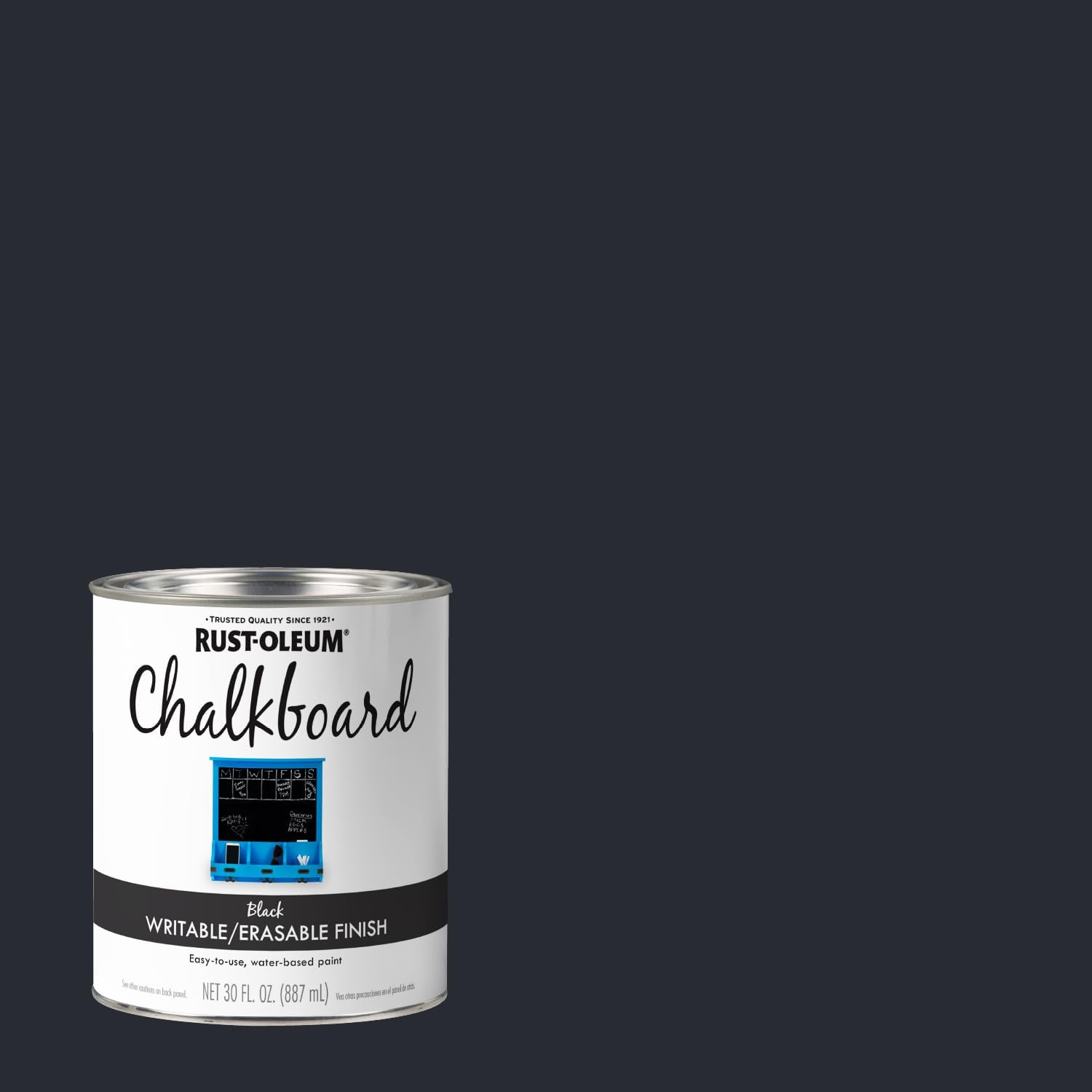
| Rust-Oleum Chalkboard Paint (30 oz brush/roll) | 150 sq ft / quart | 2 | ~75 sq ft |
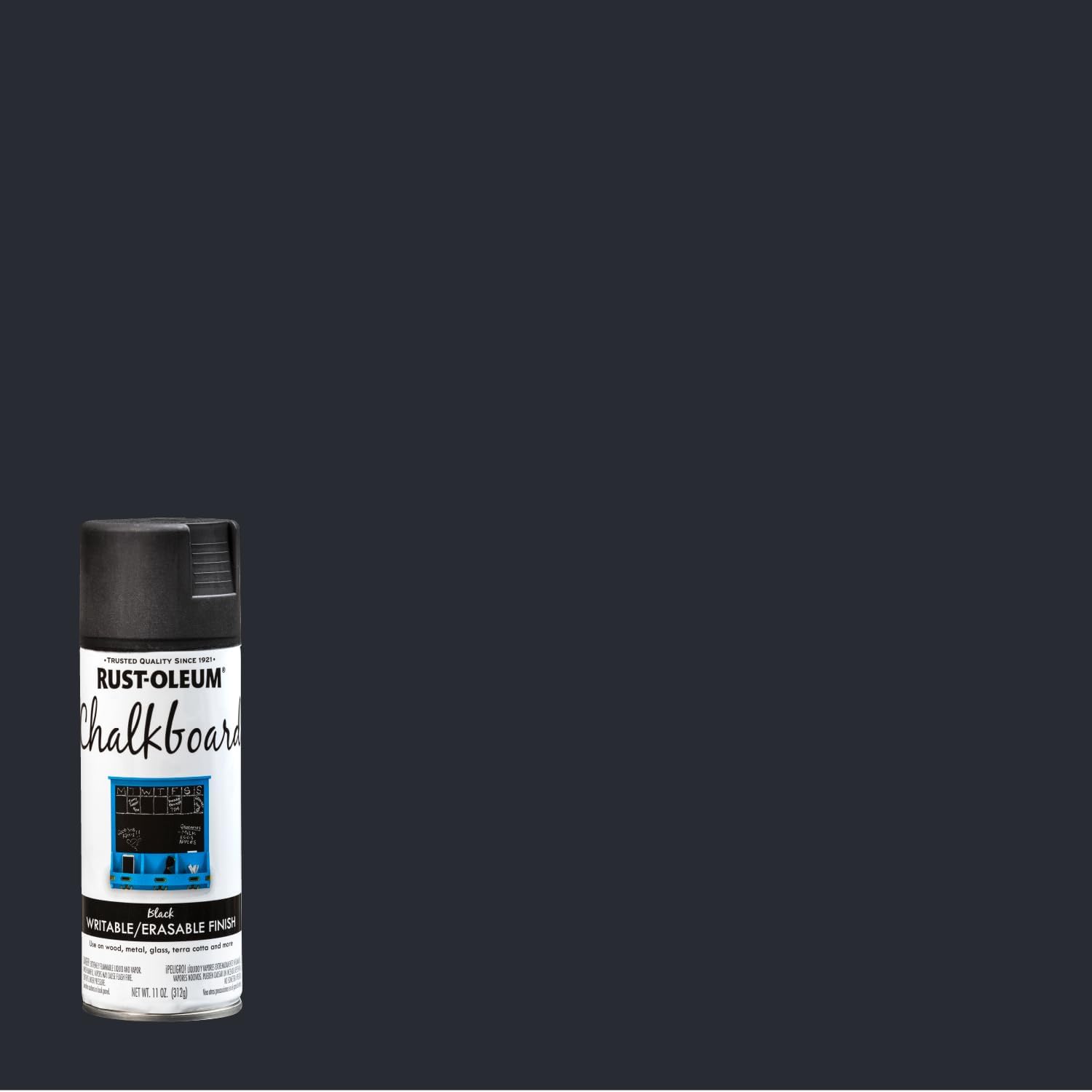
| Krylon Chalkboard Spray (12 oz aerosol) | 8–10 sq ft | 2–3 | ~4 sq ft |
| FolkArt Chalkboard Paint (16 oz brush/roll) | 32–50 sq ft | 2 | ~16–25 sq ft |
Sources: Rust-Oleum Corporation Chalkboard Paint Product Data Sheet (2025 edition); Krylon Products Group Chalkboard Spray Paint Technical Bulletin (2024); Plaid Enterprises FolkArt Chalkboard Paint FAQ and Label Spec Sheet (2025).
A few things jump out. First, Krylon’s aerosol format is genuinely small-project territory — a single spray can covers roughly the surface area of an 8-by-12-inch panel at proper two-coat depth. It is the right tool for a sign face or a cabinet insert, not for a 30-by-48-inch tabletop. Second, Rust-Oleum’s coverage number is the most generous, but it assumes you are not painting raw MDF or bare wood, both of which are highly porous and can easily consume 30–40 percent more product than the label suggests. Third, FolkArt’s stated range (32–50 sq ft) is unusually wide, which reflects real variability in how the formula behaves across different surface conditions — the low end is closer to honest on thirsty substrates.
Bob Vila’s “Best Chalkboard Paints of 2025” buyer’s guide (bobvila.com) flags this consistently: plan for at least one additional coat beyond the manufacturer minimum on any raw or lightly sanded surface, and budget your product accordingly.
Substrate-by-Substrate Ghosting Risk
Ghosting happens when chalk pigment penetrates the paint film and stains the substrate beneath — or when the paint film itself is too thin to hold a consistent chalk-and-erase cycle. The risk varies more by substrate than by brand, and understanding the mechanism is the fastest way to avoid the failure.
Raw or Unsealed Wood
This is the highest-risk substrate for ghosting. Wood grain creates directional porosity: paint soaks in unevenly, leaving some areas with a thinner film than others. When you write on a thin area and then erase, you are effectively dragging chalk pigment into an under-coated spot where it has nowhere to go except into the wood fiber itself.
Good Housekeeping’s “We Tried 7 Chalkboard Paints” review roundup (goodhousekeeping.com, 2024) explicitly notes that testers who skipped a wood primer step reported visible shadowing after their first full erase cycle, regardless of brand. The Spruce’s “The Best Chalkboard Paints, Tested and Reviewed” (thespruce.com, 2024) echoes the same finding, observing that unsealed pine and poplar substrates produced ghosting within days of first use when no primer was applied.
Decision rule on raw wood: Prime first — either with a dedicated wood primer or with Rust-Oleum’s own water-based primer — and plan for three coats of chalkboard paint, not two. FolkArt performs competitively here because its formula is slightly thicker-bodied and self-levels well over a primed grain, but the primer step is non-negotiable regardless of which brand you choose.
Rust-Oleum
$6.29
In stock on Amazon
Check price on AmazonMDF (Medium-Density Fiberboard)
MDF is the dominant substrate in flat-pack and budget furniture. It is dimensionally stable and has no grain direction, which sounds like good news — and for paint adhesion across the face, it largely is. The problem is the cut edges. MDF edges are far more porous than the face, and any edge that is not sealed will wick paint laterally, leaving a thin edge coat that ghosts almost immediately.
Rust-Oleum Corporation’s Chalkboard Paint Product Data Sheet (2025 edition) recommends edge sealing before application on MDF. This Old House’s “How to Apply Chalkboard Paint” (thisoldhouse.com, 2024) reinforces that guidance, noting that users who painted MDF edges without sealing first reported ghosting on their first erase, while users who applied a diluted PVA glue wash or a shellac-based edge sealer before painting reported clean erasing well past the first month of use.
On the face of MDF, all three brands perform well. Ghosting risk on sealed MDF faces is low across Rust-Oleum, Krylon, and FolkArt, assuming proper seasoning. The FolkArt formula is somewhat more forgiving for brush application on MDF because of its higher viscosity — it tends to self-level without brush marks better than Rust-Oleum’s thinner formula on flat horizontal surfaces.
Rust-Oleum
$16.49
In stock on Amazon
Check price on AmazonPreviously Painted or Sealed Surfaces
This is the easiest scenario for ghosting prevention, because the existing coating already seals the substrate. The primary variable shifts from porosity to adhesion — whether the chalkboard paint bonds to the existing surface without peeling or flaking during the chalk-and-erase cycle.
Krylon’s aerosol format has an adhesion advantage here: the fine spray mist creates a mechanical bond with slightly more surface texture than a brush coat. Good Housekeeping’s 2024 roundup noted that spray-applied coats over semi-gloss painted surfaces showed better adhesion retention through repeated erasing than brush-applied coats in side-by-side comparisons. The Spruce’s tested review similarly identified Krylon spray as the preferred format when converting furniture that already carried a gloss or semi-gloss topcoat.
Decision rule on existing painted surfaces: Over glossy existing paint, use Krylon spray after a light 220-grit scuff sand. Over flat or eggshell existing paint, any of the three brush or roll formulas will adhere without sanding — but always test in an inconspicuous spot first before committing to the full surface.
INSL-X
$29.99
In stock on Amazon
Check price on AmazonBrand Differentiation Beyond Coverage
Coverage and ghosting risk are the lead buying criteria, but they don’t capture every meaningful difference between these three formulas. Here is where the brands actually diverge in ways that affect a real purchasing decision.
Rust-Oleum: Best All-Around for Large Projects
Rust-Oleum Chalkboard Paint is the default recommendation in most how-to editorial because it is the most available (stocked at virtually every home-improvement retailer), comes in the largest container sizes for economy-of-scale projects, and carries the most established track record across both consumer and light-commercial applications. The formula is water-based and low-VOC — VOC stands for volatile organic compounds, the chemical off-gassing that matters in enclosed spaces such as classrooms or children’s rooms.
Owners consistently report a smooth, hard finish that holds up to repeated chalk-and-erase cycles well past the first month. The main criticism noted across testing by Good Housekeeping and The Spruce: Rust-Oleum requires more careful brushwork than FolkArt to avoid visible brushstrokes on large flat panels, particularly when applied in warm or dry conditions that accelerate open time.
For projects over 15 square feet, Rust-Oleum’s quart size delivers the best cost-per-square-foot of the three brands by a meaningful margin.
Rust-Oleum
$16.49
In stock on Amazon
Check price on AmazonKrylon: Best for Small, Precise, or Vertical Work
Krylon Chalkboard Spray wins on precision and convenience for small or intricate surfaces. The aerosol format eliminates brush marks, minimizes drip risk on vertical surfaces, and makes masking for geometric shapes straightforward. The Krylon Products Group Chalkboard Spray Paint Technical Bulletin (2024) notes a re-coat window of approximately 30 minutes, which is shorter than Rust-Oleum’s 1-to-2-hour interval and useful in time-sensitive production scenarios.
The tradeoff is cost-per-square-foot. At approximately $7–10 per can covering roughly 4 square feet at working depth with two coats, Krylon is the most expensive formula per unit area by a significant margin. For a single sign face, cabinet panel insert, or drawer front, that cost is irrelevant. For anything over 3 square feet, the math swings hard toward a brush or roll formula. Bob Vila’s 2025 buyer’s guide flags this directly, recommending that shoppers reserve aerosol chalkboard paint for detail and accent applications rather than field coverage.
Rust-Oleum
$6.29
In stock on Amazon
Check price on AmazonFolkArt: Best for Color Options and Craft-Scale Projects
FolkArt Chalkboard Paint is the craft-market leader, widely available at Michaels, Hobby Lobby, and similar craft retailers. It comes in the broadest color range beyond standard black — including white, green, and several tinted versions — which matters significantly for design-forward applications where black is not the right aesthetic choice. The formula is thick and forgiving for brush application, with self-leveling behavior that produces clean results even for less experienced painters.
The primary limitation is container size. FolkArt is sold primarily in 8 oz and 16 oz bottles, making it cost-inefficient for projects over approximately 25 square feet. Plaid Enterprises’ FolkArt Chalkboard Paint FAQ and Label Spec Sheet (2025) confirms that the white formula requires one additional coat beyond the black version to achieve full opacity — a practical note worth absorbing before you plan a light-surface application.
INSL-X
$29.99
In stock on Amazon
Check price on AmazonThe Seasoning Step: Where Most Projects Fail
This deserves its own section because it is the single most common failure point across all three brands, regardless of substrate. No amount of correct product selection rescues a surface that was not properly seasoned.
Seasoning means rubbing the flat side of a stick of chalk sideways across the entire cured surface — not writing with the tip, but dragging the broad face — then wiping it clean with a dry cloth before you write on it normally for the first time. The purpose is to pre-fill the paint’s microscopic texture so that your first intentional marks do not etch themselves in permanently.
Cure time before seasoning matters. Rust-Oleum’s Product Data Sheet specifies a minimum 24-hour cure before seasoning; Krylon’s Technical Bulletin states the same; Plaid Enterprises’ FolkArt FAQ recommends a full 24 hours as well, though the FAQ notes that some users report adequate results at 12 hours in low-humidity conditions. The critical failure mode is writing on the surface immediately after it feels dry to the touch — surface dry and cure-dry are not the same state, and the paint film is not yet hard enough to resist chalk penetration.
This Old House’s 2024 tutorial on chalkboard paint application and Good Housekeeping’s 2024 roundup both identify rushed or skipped seasoning as the dominant cause of early ghosting complaints across all brands. The pattern in aggregated owner feedback is consistent: users who seasoned properly and waited the full cure time report clean, ghost-free surfaces through months of repeated use.
Substrate-specific decision rules:
- Raw wood → prime with water-based primer, apply three coats of any brand, season after full 24-hour cure, budget 40 percent more product than the label states.
- Sealed MDF face → two coats of FolkArt or Rust-Oleum brush formula, season at 24 hours, expect clean long-term performance.
- MDF edge → seal with diluted PVA glue or shellac-based sealer first, then treat as sealed MDF face.
- Existing glossy-painted surface → 220-grit scuff, Krylon spray in 2–3 passes, season at 24 hours.
- Project under 3 square feet or requiring crisp masked geometry → Krylon spray, no hesitation.
- Project over 15 square feet → Rust-Oleum quart for cost efficiency; Krylon’s per-square-foot cost becomes prohibitive at scale.
- Color options beyond black are a priority → FolkArt is the only brand with a meaningful color range in craft-retail quantities.
All three brands are legitimate products with documented track records. The purchase decision is really about substrate preparation discipline, project scale, and surface format. Get those three variables right and any of them will produce a surface that earns its place on your furniture for years of daily use.
Affiliate disclosure: ChalkboardTable.com earns a commission on purchases made through links on this site. Our editorial recommendations are based on published manufacturer specifications, manufacturer documentation, and aggregated owner reviews — not paid placement.